













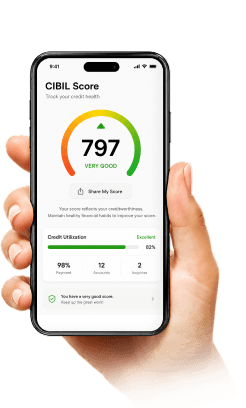
Check Your CIBIL Score
You will receive an OTP on the mobile number provided.


100% Secure & Confidential
Check your free CIBIL score and credit report online in just a few clicks. Stay informed about your credit health, track your financial profile, and understand the factors that impact your score. A good CIBIL score can improve your chances of loan and credit card approvals. Regularly monitoring your credit report also helps identify errors, detect fraudulent activity, and maintain a strong financial reputation. Access your latest credit insights anytime, anywhere — quickly, securely, and at no cost.
What is a credit score?
A Credit Score is a 3 digit number ranging from 300 to 900 that reflects your creditworthiness based on your credit history and repayment behaviour. Commonly known as the CIBIL Score, it helps Banks and NBFCs assess your eligibility for loans and credit products. Your score is calculated by Credit Information Companies (CICs) using lender-reported information and is updated regularly as per RBI guidelines.
- Credit Score is calculated using factors like EMI payments, credit card bill repayments, and credit applications.
- Lenders report updated credit information to credit bureaus every 15 days, ensuring your score reflects the latest financial activity.

Mobile Number verification
Please enter the OTP sent on your Mobile Number

What is a credit score?
What You Get in Your CIBIL

Personal Information & Account Details

Your Credit Score

Enquiry History

Loan & Credit Card Summary

Credit Utilization Details

Repayment History
Why is Your CIBIL Score Important?
Banks and NBFCs review your credit score to assess your creditworthiness and repayment reliability for loans or credit cards.

Higher credit limits

Preapproved offers

Stronger negotiation power

Faster loan approvals

Better interest rates

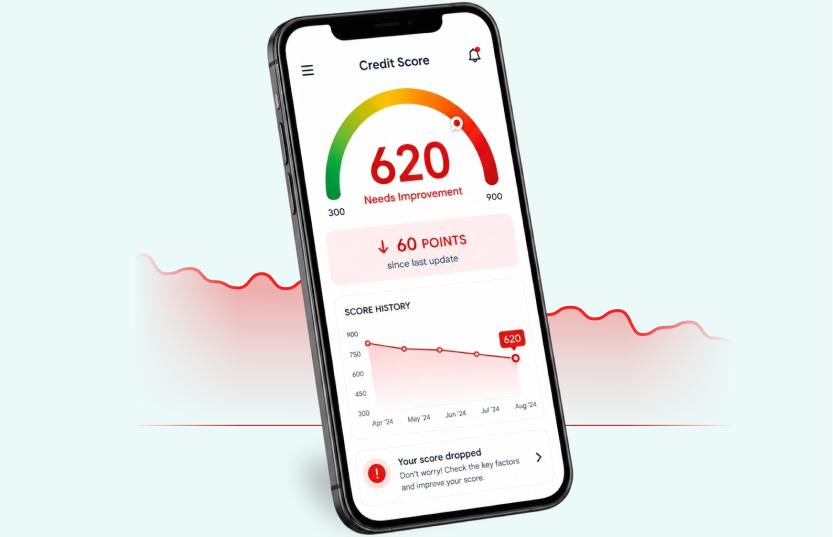
What Are the
Reasons for a Low Credit Score?
A low credit score can result from several factors. Some key reasons that can impact your CIBIL score are:
- Missed or Late EMI Payments
- High Credit Utilisation Ratio
- Too Many Loan Applications
- Default or Settled Accounts
- Errors in Credit Report

Credit Score Ranges & What They Mean
Your credit score ranges from 300 to 900, with a score closer to 900 improving your chances of credit approval.
| Score Range | Rating |
|---|---|
| 791 - 900 | 
|
| 771 - 790 | 
|
| 731 - 770 | 
|
| 681 - 730 | 
|
| Below 680 | 
|
Credit Score Ranges & What They Mean
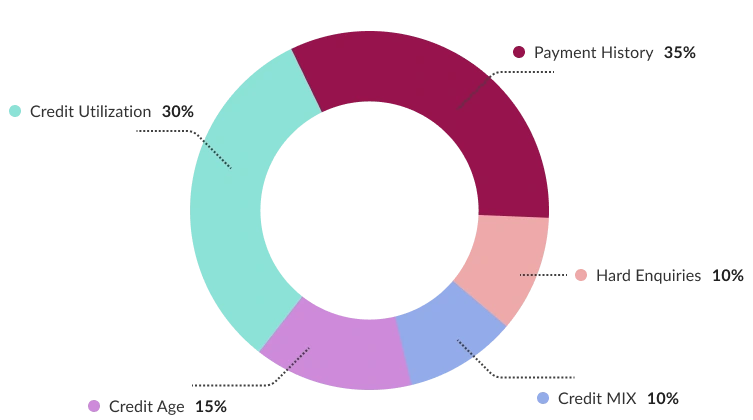
How is Your
Credit Score Calculated?
Your credit score is based on factors that reflect your credit history and repayment behaviour, which banks and NBFCs review when evaluating new credit applications.

Frequently Asked Questions
Still have a question?
If you can not find your answers to your questions in our FAQ's, you can get in touch with us.
Still have a question?
Your CIBIL Score is a 3-digit numeric summary of your credit history that indicates your creditworthiness and demonstrates your ability to repay a loan. CIBIL score ranges from 300 to 900. The closer your score is to 900, the higher are the chances of you getting your loan /credit card.
Your CIBIL Report (also known as CIR i.e. credit information report) is a record of your financial history compiled from information received from banks and financial institutions. It includes credit enquiries, open and closed credit accounts, personal & employment information and your payment history.
You will find the below details in your CIBIL report.
- Your latest CIBIL Score, a 3-digit numeric summary of your credit history (between 300 to 900).
- A summary of your credit payment history, gathered from information provided by lenders.
- Personal information such as your name, date of birth and gender linked to your loan and credit cards.
- A list of all enquiries made by the lender for your loan and credit card applications for last 36 months.
- Details of all your active and inactive loan and credit card accounts.
Your CIBIL Score is calculated mainly using your Payment History, Credit Utilization, Age of Credit and Enquiries.
Your CIBIL Score plays a crucial role when lenders evaluate your loan or credit card applications. Regularly checking your CIBIL Score and Report allows you to assess your credit health, identify any errors, and enhance your chances of loan or credit card approval.
Pay your EMIs and credit card bills on time, maintain a low credit utilization ratio, avoid multiple loan applications, and regularly check your report for errors.