













Credit Score and what does it indicate?
Your credit score is often one of the first things lenders review when you apply for a loan or credit card. It reflects your past credit behaviour and helps lenders assess how you have managed credit obligations over time.
Whether you are planning to apply for a Personal Loan, Business Loan, Loan Against Property, Home Loan or a credit card, understanding your credit score can help you make better financial decisions.
In this page, we explain what a credit score is, what affects it and how you can build a healthier credit profile.
Credit Score and what does it indicate?
What is a Credit Score? Meaning in simple words
A credit score is a three-digit number that summarises your credit history. It is based on your borrowing and repayment behaviour and typically ranges from 300 to 900. Higher scores generally indicate stronger credit management habits.
Your score is derived from the information in your credit report, which includes:
- Loans availed
- Credit card accounts
- Repayment history
- Outstanding balances
- Credit enquiries
In India, credit scores are generated by Credit Information Companies (CICs) licensed by the Reserve Bank of India (RBI):
- TransUnion CIBIL
- Experian
- Equifax
- CRIF High Mark
Each bureau uses its own model, so your score may differ slightly from one bureau to another.
A credit score does not automatically determine whether a lender approves or rejects a loan. It is one of several factors lenders consider.

What is a Credit Score? Meaning in simple words
Credit Score vs Credit Report vs Credit Bureau
These terms are often used interchangeably, but they mean different things.
| Term | What it means |
|---|---|
| Credit score | A three-digit number that summarises the information in your credit report |
| Credit report | A detailed record of your credit history: loans, credit cards, repayments and lender enquiries |
| Credit bureau | An RBI-registered organisation that collects and maintains credit information |
Simply put, your credit report holds the details and your credit score sums them up in one number. A CIBIL Score is one type of credit score.
Credit Score vs Credit Report vs Credit Bureau

What Does Your Credit Score Say About You?
Your credit score gives lenders insight into how you have handled credit in the past. It may indicate:

Whether repayments have generally been made on time

How responsibly you have used available credit

How often you have applied for new credit

How long you have maintained credit relationships

Why does your Credit Score matter?
A healthy credit profile can support your loan and credit card applications, credit limit decisions, and access to suitable lending products.
However, lenders look at more than your score. They may also consider:
- Income
- Existing financial obligations and debt to income ratio
- Employment stability
- Business profile (where applicable)
- Their own internal credit policy
Your credit score is one part of the assessment, not the sole deciding factor.
Why does your Credit Score matter?
How is a Credit Score calculated?
Each credit bureau uses its own model, but most scores are influenced by the same core factors.

Your repayment record is one of the most important factors. Paying loan EMIs, credit card dues and other credit obligations on time contributes positively. Late payments, missed EMIs or defaults can hurt your credit history.
Read More
Credit utilisation is the share of your available credit that you are currently using.
For example: if your total credit card limit is ₹1,00,000 and you have used ₹30,000, your utilisation is 30%.
Consistently high utilisation may signal greater dependence on credit. Lower, steady utilisation is generally viewed more favourably.

Older accounts give lenders a longer track record of your behaviour. A long, well-managed credit history helps show responsible credit management.
Read More
Not every look at your credit report counts the same way.
| Type | When it happens | Effect on your score |
|---|---|---|
| Soft enquiry | You check your own score or a lender checks it for a pre-approved offer | Does not affect your score |
| Hard enquiry | A lender checks your report after you apply for a loan or credit card | Multiple enquiries within a short period may have a negative impact on your credit score. |
So checking your own credit score is safe. Applying to many lenders at once is what can count against you.
Read More
Credit profiles often include a combination of:
- Secured credit: Home Loan, Loan Against Property, Vehicle Loan
- Unsecured credit: Personal Loan, Business Loan, Credit Card and Working Capital facility
A balanced, well-managed credit mix can contribute positively to your overall credit profile.
Read MoreWhat does not directly affect your Credit Score?
Several common beliefs about credit scores are false. The following are not used to calculate your score:
- Salary or income: a higher income does not necessarily translate into a higher score
- Savings account balance: bank balances are not included in the calculation
- Investments or fixed deposits: your holdings do not affect your score
- Educational qualification or job title: neither is a scoring factor
Lenders may still review your income and job separately when assessing an application.
What does not directly affect your Credit Score?
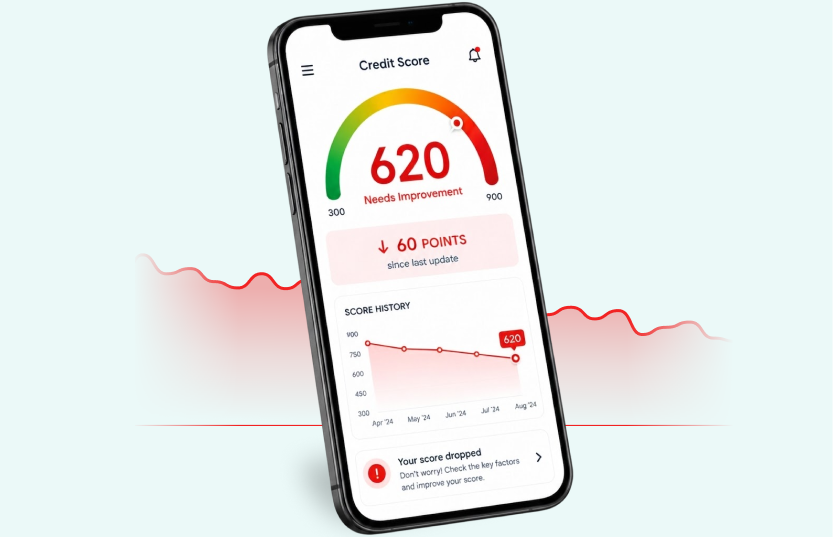
How to improve your Credit Score
A better score comes from consistent, responsible credit behaviour over time.
- Pay every due on time. Loan EMIs, credit card bills and other credit obligations should be paid by their due dates.
- Keep utilisation in check. Avoid regularly using a large share of your credit limits.
- Apply for credit only when you need it. Several applications in a short span add multiple hard enquiries.
- Keep older accounts active. Long-standing, well-managed accounts help your credit history.
- Review your credit report regularly. Look for incorrect, outdated or duplicate entries.
- Manage joint accounts and guarantees carefully. As a co-borrower, guarantor or joint holder, repayments on those facilities can reflect on your profile too. Even if you are not the primary borrower, defaults or delays by a borrower for whom you have provided a guarantee may affect your credit score.
No Credit History? How to build your first Credit Score
If you have never taken out a loan or used a credit card, you may have little or no credit history. You can start building credit history:
- Start with a suitable credit product that matches your needs and eligibility.
- Pay on time, every time. A positive repayment record starts with your first EMI or bill.
- Borrow only what you can comfortably repay.
- Avoid applying to many lenders at once.
- Be consistent. A credit profile builds up over months of responsible use.
No Credit History? How to build your first Credit Score
Credit Score Myths vs Facts
| Myth | Fact |
|---|---|
| High income means a high credit score | Income and credit score are separate. Your score reflects how you repay, not how much you earn. |
| Checking my own score lowers it | Checking your own score is a soft enquiry and does not affect it. |
| Paying the minimum due is enough to protect my score | Paying the minimum avoids a late payment mark, but the unpaid balance keeps your utilisation high and continues to incur interest. Paying in full is better for your profile. |
| Closing an old credit card improves my score | Closing a card reduces your total available credit and can shorten your credit history, which may increase utilisation. |
| One missed EMI doesn't matter | Even a single late payment can be reported and remain on your credit record. |
Credit Score Myths vs Facts
How do lenders use Credit Scores?
A credit score gives lenders a quick snapshot of your credit history. They usually read it together with:
- Income and repayment capacity
- Existing liabilities
- Employment or business details
- Banking behaviour
- Internal risk policies
The score supports the evaluation, but the lender makes the final lending decision based on all these factors.
How do lenders use Credit Scores?
Know more about Credit Score



Oct 29, 2026

Oct 29, 2026

Oct 29, 2026

Frequently Asked Questions
Still have a question?
If you can not find your answers to your questions in our FAQ's, you can get in touch with us.
Still have a question?
Credit scores in India typically range from 300 to 900.
There is no fixed timeline. Lenders now report to credit bureaus every weekly, so on-time payments and corrections reflect sooner than before. Lasting improvement still depends on consistent repayment over several months.
A credit score is a single number. A credit report is the detailed record of your loans, cards, repayments and enquiries on which the score is based.
No. Income is not used to calculate your score, although lenders may assess it separately.
Some lenders consider new to credit applicants based on their own eligibility criteria and policies.
It can. Closing a card reduces your available credit and may shorten your credit history, depending on your overall profile.
Dispute the entry with the credit bureau or the lender that reported it.
No. Checking your own score is a soft enquiry and does not affect it.